
Skip to content
  • Free written quotes
  • Local crews
Sydney, NSW (02) 5550 1498
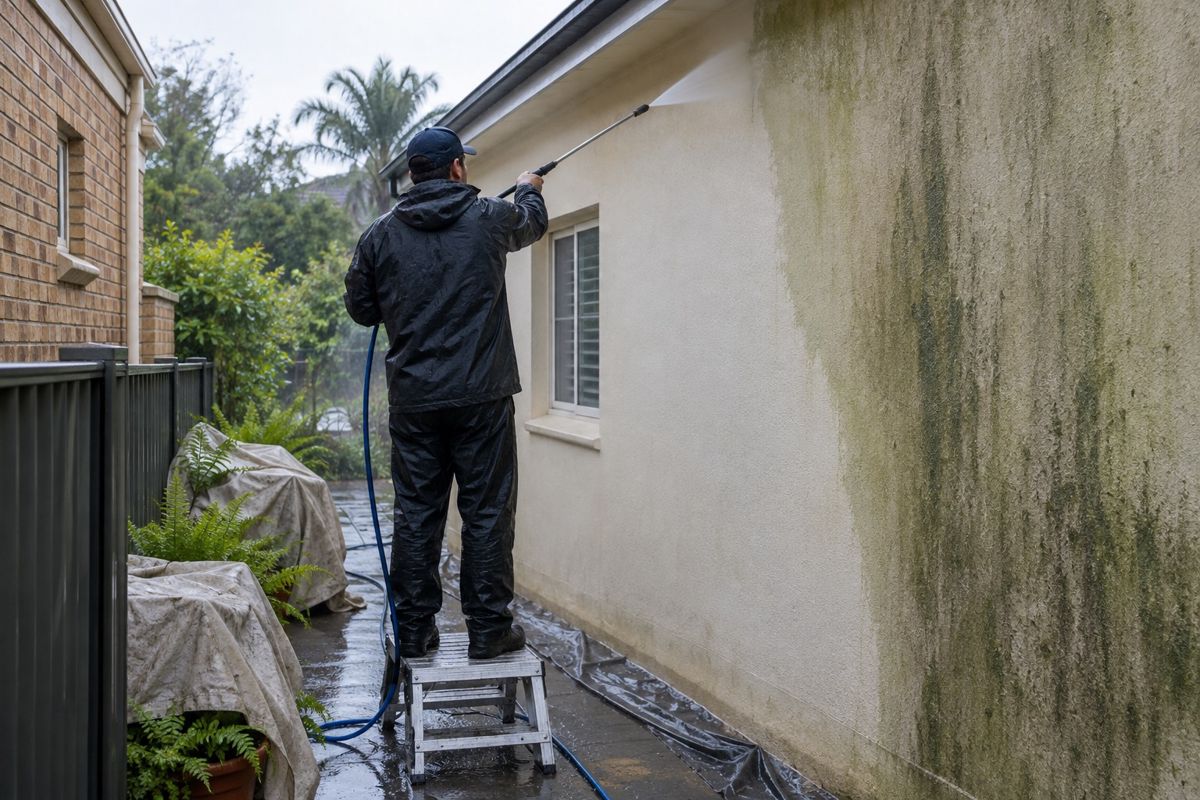
Soft washing a mould-streaked rendered wall on a Sydney house

Soft wash cleaning in Sydney

House washing in Sydney for brick, render and weatherboard

Low-pressure soft washing lifts mould, algae and dirt from painted and rendered walls without blasting the surface.

  • Low pressure for painted and rendered walls
  • Mould and algae treated at the source
  • Written quote before work starts

Step 1 of 3

What needs cleaning?

What is soft wash house washing?

Soft washing cleans a house with low pressure and a cleaning solution that breaks down mould, algae and grime. The solution does the heavy work, and the rinse carries it away. This is different from high pressure washing, which relies on force and can strip paint, crack render and push water behind cladding.

House washing in Sydney is usually done for three reasons: the walls look dull or streaked, green and black growth is spreading, or the home is being prepared for painting, sale or rental. Washing before painting matters because paint does not bond well to a chalky, mouldy surface.

The same method suits eaves, fascias, garage doors and outdoor walls. If you are also thinking about the roof, see roof cleaning, which uses a similar low-pressure approach.

Which wall types can be washed, and how?

Sydney homes are built from many materials, and each one is handled differently.

Face brick

Brick is durable but the mortar joints can be soft, especially on older homes. Low pressure keeps the joints intact.

Render and painted walls

Render can hold water and crack if hit with force. Soft washing is the usual method, and loose or flaking paint should be pointed out before the job.

Weatherboard and fibre cement

Water driven up under the boards can reach the framing. A gentle wash with the spray angled downwards is the safer choice.

Sandstone

Sandstone is soft and can be etched or stripped, so it needs the lowest pressure and a suitable cleaner.

Older fibro sheeting

Some homes built before the late 1980s have asbestos cement sheeting. It should not be pressure washed, because damaged fibres can be released. If you are unsure what your walls are made of, have them identified before any cleaning.

Why do Sydney houses get mould and staining?

Warm, humid summers, regular rain and sea air give mould and algae plenty to feed on. The growth is usually worst on walls that rarely see the sun, such as south-facing sides, narrow side passages and areas shaded by large trees. Close planting, damp gardens and poor airflow around the walls make it worse.

Other common marks include rust streaks below metal fittings, dirt lines under eaves, spider webs and mud splash near ground level. Homes near busy roads can also build up a grey traffic film, and coastal suburbs get a salty haze on windows and trims.

Washing removes what is on the surface, but it does not fix damp. If mould keeps returning, look at gutters, downpipes, drainage and garden beds that sit against the wall. The crew can point out likely causes, but a builder or painter should look at anything structural.

A house wash is quoted in writing after the crew has seen photos or the property itself. The main factors are:

  • The total wall area and the number of storeys.
  • The wall material and its condition.
  • How heavy the mould or staining is.
  • Access around the house, including steep ground, tight side passages and fences.
  • Whether windows, gutters or eaves are included in the quote.

A single-storey brick home is simpler than a two-storey rendered house with a steep block. Be wary of a price given without any information about the home. Ask what is included, what is not and whether GST is added.

Also ask how the work will be done above ground level, since that affects safety and cost. A driveway wash in the same visit can be quoted together.

How long does it take, and when should you call?

Many single-storey houses can be washed in a day or less. Larger homes, two-storey walls and heavily stained surfaces take longer. The crew will usually wash, let the solution work for a short time and then rinse, so the job is not all spraying.

On the day, windows and doors should be closed, pets kept inside and washing taken off the line. Air conditioning units, power points and lights are protected or avoided. Plants are rinsed or covered, and you may be asked to move garden furniture.

Call when you see green or black patches, before an exterior paint job, or before listing the property. Early spring and autumn can be convenient, but Sydney weather is mixed, so there is no perfect month. Return to the home page to see the other services.

How it works

  1. Send photos or request a visit

    Tell us what needs cleaning.

  2. Get a written quote

    Clear price before any work starts.

  3. We clean and tidy up

    Rinse, check and leave the site clean.

Free written quotes
Local crews
Safe soft-wash methods
Fast scheduling

Request house washing

Tell us what you need and we call you back.

Step 1 of 3

What needs cleaning?

No obligation.

Questions about pressure washing in Sydney

Is soft washing better than pressure washing for a house?

For painted walls, render, weatherboard and most cladding, yes. Soft washing relies on a cleaning solution and low pressure, so it is gentler on the surface and less likely to force water behind the walls. Pressure washing is better suited to hard, plain surfaces such as concrete. A good provider uses both, depending on what is being cleaned.

Will washing the house damage the paint?

Sound paint usually copes well with a gentle wash. Paint that is already flaking, chalking or poorly bonded can come off, even at low pressure. Point out any weak areas before the job. If the house is due for repainting, washing first is useful because it removes mould and loose material that stops new paint from sticking.

Can you wash a home that might have fibro walls?

Do not pressure wash fibro sheeting. Older cement sheeting can contain asbestos, and high pressure can damage it and release fibres. If your home dates from before the late 1980s and has flat sheet walls or eaves, have the material identified first. A licensed asbestos professional can advise on safe options.

How often should a house be washed?

It depends on the shade, trees, moisture and nearby roads. Some homes in dry, sunny spots stay clean for a long time, while shaded or damp walls grow mould within a year or two. Instead of following a fixed schedule, wash when you see new growth or streaking. Regular gutter and drainage maintenance helps slow the buildup.

Is the cleaning solution safe for my garden and pets?

Plants are normally pre-wet and rinsed, and sensitive garden beds can be covered. Ask which products will be used and keep pets inside until the surfaces are dry. Runoff should not be left to flow into the street drain. If you have a vegetable patch, a pond or a fish tank near the walls, mention it when you book.

Ready when you are

Call now or request a quote online.

(02) 5550 1498