Skip to content
  • Free written quotes
  • Local crews
Sydney, NSW (02) 5550 1498
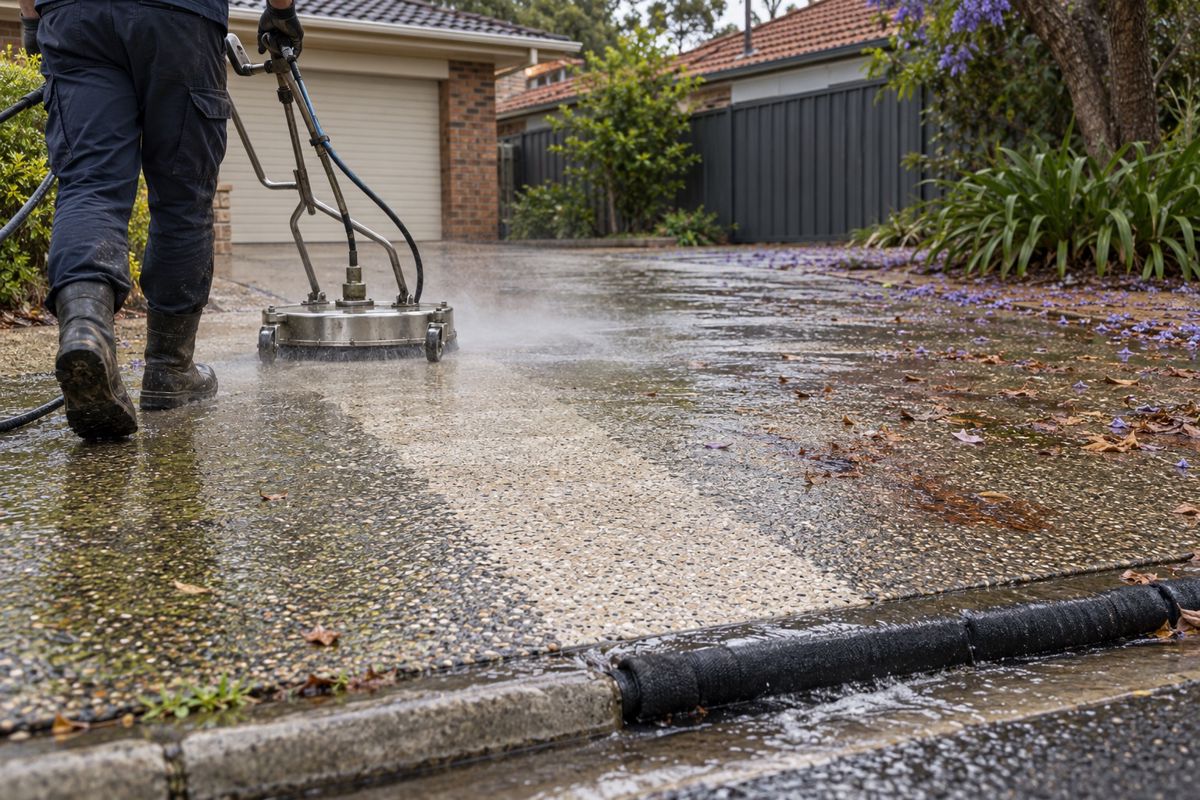
Surface cleaner removing algae and leaf stains from a concrete driveway

Driveway cleaning in Sydney

Driveway pressure washing in Sydney for concrete and pavers

Remove oil, algae, leaf stains and grime from driveways, paths and steps. Pressure is matched to the surface.

  • Concrete, pavers and sandstone paths
  • Oil and rust spots treated first
  • Written quote before work starts

What does driveway pressure washing involve?

Driveway pressure washing removes the grime that builds up on concrete, pavers and sandstone flagging. In Sydney that grime is usually a mix of tyre marks, oil drips, leaf stains, green algae and a thin black film from damp, shaded corners. This page covers driveway pressure washing for homes and small commercial entrances across the city.

A typical job starts with sweeping loose debris and checking the surface. Plants, letterboxes and carport items are moved or covered. Oil stains are treated first with a degreaser. The whole slab is then cleaned with a rotary surface cleaner or a fan tip, working in even passes so you do not end up with stripes.

The same approach suits paths, front steps, garage floors and the concrete around a pool. Painted walls and roofs need a gentler method, which is covered under house washing.

Which stains and problems are common on Sydney driveways?

Sydney's humid coastal climate and regular rain give algae and moss a good start on any surface that stays damp. South-facing drives and those under trees are the worst. Common problems include:

  • Green and black algae on sloping or shaded concrete, which can also make the surface slippery.
  • Tannin stains from fallen leaves, flowers and seed pods, including jacaranda and fig in many suburbs.
  • Oil and brake fluid marks near the garage door or kerb.
  • Rust spots from metal furniture, pots or sprinklers.
  • White salt-like deposits, known as efflorescence, on newer concrete or pavers.

Why does the surface type matter?

Plain broom-finished concrete is the most forgiving. Exposed aggregate can lose small stones if the pressure is too high. Sandstone and some older pavers are soft and can be etched or pitted, so they need lower pressure and a wider tip. Sealed or stencilled concrete may need a gentler wash to avoid stripping the sealer.

What affects the price of driveway cleaning?

Driveway cleaning is quoted in writing, not at a fixed rate, because every driveway is different. The main factors are:

  • The total area, including paths and steps if you want them done.
  • The surface type and how fragile it is.
  • How heavy the staining is, and whether oil or rust treatment is needed.
  • Access to water and power, and how far equipment must be carried.
  • Whether you plan to reseal afterwards, which is a separate job.

A long sloping drive with years of algae takes more time than a short flat slab with a few oil spots. Ask any provider to confirm in writing what is included, whether GST is added and what happens if the job runs longer because of access or weather.

A standard single driveway is often a half-day job or less. A large or double-width drive, a long sloping entrance or heavy staining can take longer. Weather also plays a part. Heavy rain can interrupt the work, and the surface needs a few hours to dry before it shows its true colour.

On the day, expect this order of work:

  1. A walk over the surface to note cracks, loose pavers and fragile areas.
  2. Plants and outdoor items are moved or covered, and nearby drains are protected.
  3. Oil and rust spots are pre-treated.
  4. The main wash, followed by a rinse and sweep.
  5. A walk-through with you before the crew leaves.

Keep cars off the drive until the crew says it is dry enough. Keep pets away from wet areas and any cleaning products.

When should you call, and what about stormwater?

Call when the surface feels slippery, when a stain has been there a while, or before you sell, rent out or paint. Moss and algae are easier to remove before they have bitten deep into the concrete.

In Sydney the general rule is that only rain should go down the stormwater drain. Wash water can carry oil, detergent and sediment into local creeks and the harbour. Rules differ between councils, so it is sensible to ask how wash water will be managed on your property, for example by blocking the drain and collecting or redirecting the runoff.

If you also want other areas looked at, see deck and fence cleaning or roof cleaning. You can also start from the home page to compare all services.

How it works

  1. Send photos or request a visit

    Tell us what needs cleaning.

  2. Get a written quote

    Clear price before any work starts.

  3. We clean and tidy up

    Rinse, check and leave the site clean.

What you can expect

1

Free written quotes

2

Local crews

3

Safe soft-wash methods

4

Fast scheduling

Request driveway cleaning

Tell us what you need and we call you back.

Step 1 of 3

What needs cleaning?

No obligation.

Questions about pressure washing in Sydney

Can pressure washing damage a concrete driveway?

It can if the pressure is too high or the nozzle is held too close. Exposed aggregate can lose stones, and old or cracked concrete can chip. A rotary surface cleaner spreads the force evenly and reduces stripes and gouges. Tell the crew about cracks, patched areas and any sealer so they can set the pressure and method to suit.

Will the oil stains come out completely?

Fresh oil often lifts well with a degreaser. Old stains that have soaked into porous concrete may fade rather than disappear. A good provider will say honestly what to expect before starting. Repeat treatment or a poultice can help in some cases, but results depend on the concrete and how long the stain has been there.

Is it safe to wash pavers and sandstone?

Yes, with the right method. Pavers can lose sand from the joints under strong pressure, and sandstone can be etched. Lower pressure, a wider tip and a suitable cleaner are usually used. Joints may need topping up with sand after washing, and sealing is a separate decision that you can discuss with the provider.

How soon can I drive on it after cleaning?

Concrete is usually fine to walk on once the surface water has gone, but it is best to ask the crew. A damp surface can be slippery and can pick up tyre marks. If a sealer is applied, the curing time is set by the product, so follow the instructions on the day.

Do you wash driveways for strata or rental properties?

Strata and rental driveways can be quoted in the same way, but the owner, agent or owners corporation usually needs to approve the work first. Send the details of the area, any shared access and when it can be reached. Common property in a strata scheme may need committee approval, so check before booking.

Ready when you are. Call now or request a quote online.