
Skip to content
  • Free written quotes
  • Local crews
Sydney, NSW (02) 5550 1498
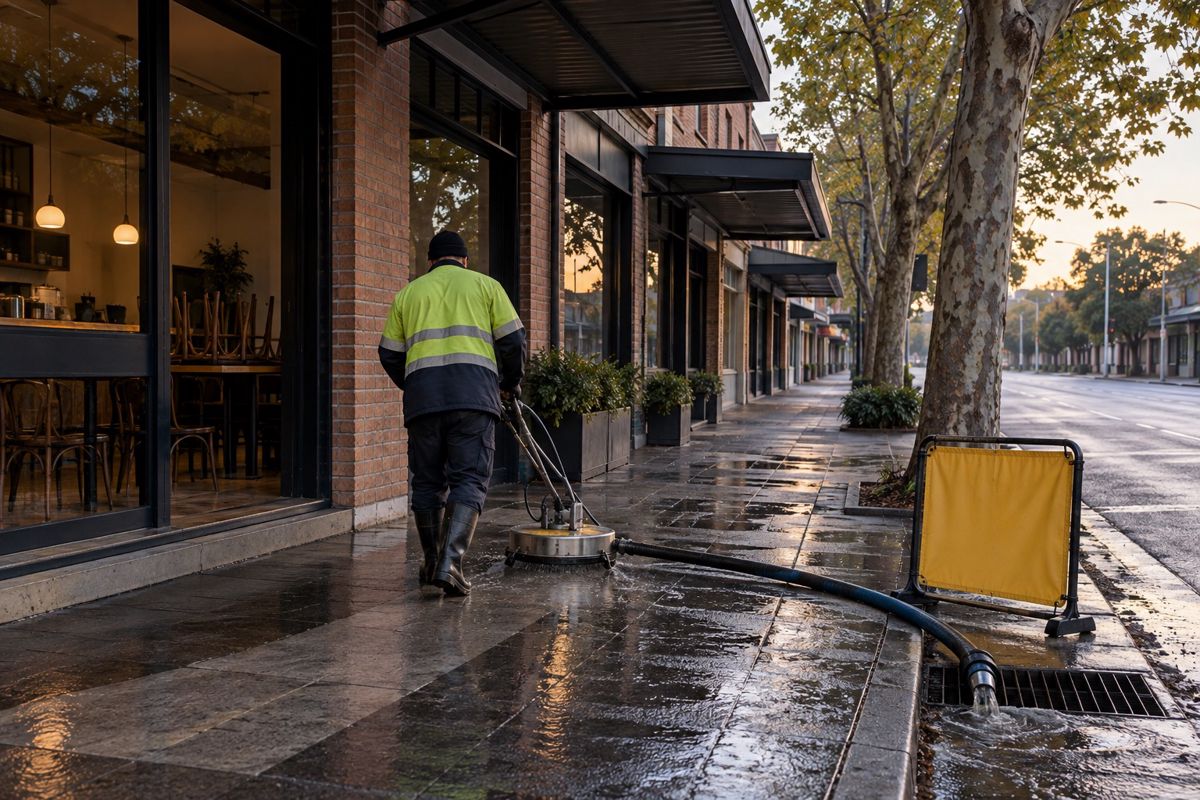
Worker cleaning a shopfront footpath on a quiet Sydney street

Commercial washing in Sydney

Commercial pressure washing in Sydney for shops and car parks

Clean entrances, footpaths, loading areas, car parks and building exteriors so your site looks cared for.

  • Shopfronts, car parks and loading areas
  • Work planned around trading hours
  • Written quote before work starts

Step 1 of 3

What needs cleaning?

What does commercial pressure washing cover?

Commercial pressure washing in Sydney covers the outdoor surfaces that customers, tenants and staff see every day. That includes shopfront footpaths and entrances, awnings, car parks, loading docks, bin areas, building facades and paved courtyards. The work can also include outdoor dining areas and the concrete around small industrial units.

Each surface needs its own method. Concrete car parks and footpaths take high pressure well, while painted facades, render and glass need a gentler approach. Awnings and signage supports need care so that water and cleaners do not damage the finish.

The same equipment used at homes works for businesses, but the planning is different. Access, public safety, trading hours and neighbouring tenants all affect how the job is done. For painted or rendered walls, the method is the same low-pressure approach described under house washing.

What are the common problems at Sydney commercial sites?

Busy sites pick up dirt faster than homes. Typical problems are:

  • Chewing gum, food spills and grease on footpaths outside cafes and takeaway shops.
  • Oil and tyre marks in car parks and loading bays.
  • Bird droppings under awnings, trees and ledges.
  • Mould and algae in shaded entrances, stairwells and courtyards.
  • Traffic film and soot on facades along busy roads.
  • Graffiti or sticker residue on walls and bins.

In humid weather, damp shaded areas can become slippery, which creates a trip and fall risk for visitors. Regular cleaning helps keep walkways safe and presentable.

Grease and food waste are a particular concern for hospitality sites, because the runoff can pollute stormwater. Do not assume a quick hose-down is acceptable. Ask how wash water from greasy areas will be collected and where it will go.

How is a commercial wash planned around trading hours?

The best time to wash is when it disrupts the fewest people. For shops and cafes that often means early morning or after closing. For office buildings, strata complexes and warehouses, it may be a weekend. Good planning covers:

  • When the area can be closed or cordoned off.
  • Wet floor signs, barriers and clear paths for pedestrians.
  • Notice to neighbours and tenants who share the space.
  • Where equipment and water supplies will be placed.
  • How wash water will be contained or collected.

If the work is on a public footpath, council rules may apply, and the approval route depends on the council. Ask your property manager, owners corporation or council what is required before booking. A written plan avoids surprises on the day. Cleaning an entrance driveway or paved path can be added to the same visit.

Commercial work is quoted in writing, and a site visit or a good set of photos helps. The price depends on:

  • The total area and number of separate areas.
  • The surface types and how dirty or greasy they are.
  • Whether work must be done after hours, which can change the cost.
  • Access, height and whether lifts or ladders are needed.
  • Water collection and disposal requirements, particularly for greasy areas.
  • Whether the job is one-off or repeated on a schedule.

A small shopfront is far simpler than a multi-level car park. Ask the provider to break the quote into areas so you can see what each part costs. Ask whether GST is added, and what is covered if the weather forces a second visit.

What should a business ask before booking?

Before you agree to a quote, ask a few plain questions. Does the provider carry public liability insurance, and can they show it? How will pedestrians be protected? How will wash water be handled so it does not reach the street drain? Who is responsible for any damage? It is reasonable to ask for proof of insurance from any provider before a crew starts.

Tell the crew about delicate finishes, signage, glass, power outlets and any existing damage. Take photos before and after. If your building is strata, check whether the owners corporation must approve the work.

Call when slippery patches appear, before a lease inspection, ahead of an opening or after a long wet spell. For timber decks on a cafe frontage, see deck and fence cleaning. The home page lists everything else.

How it works

  1. Send photos or request a visit

    Tell us what needs cleaning.

  2. Get a written quote

    Clear price before any work starts.

  3. We clean and tidy up

    Rinse, check and leave the site clean.

What you can expect

1

Free written quotes

2

Local crews

3

Safe soft-wash methods

4

Fast scheduling

Request commercial washing

Tell us what you need and we call you back.

Step 1 of 3

What needs cleaning?

No obligation.

Questions about pressure washing in Sydney

Can you wash a shopfront without closing the business?

Often yes, if the work is planned for quiet hours and the area is cordoned off. Many sites choose early morning or after closing. The provider should set up barriers and signs, and keep walkways clear. Talk through trading hours, deliveries and customer access when you request a quote, so the job fits the way your business runs.

How is wash water handled at a commercial site?

Wash water can carry oil, grease, detergent and dirt, and it should not go into the stormwater drain. Depending on the site, providers may block drains, collect runoff with a vacuum or send it to a permitted point. Rules vary by council and site. Ask for the plan in writing before the job starts.

Do you need council approval to wash a footpath?

It can depend on the council and the work. Washing a footpath outside your own shop may be treated differently from work that blocks the footpath or involves equipment on public land. Contact your local council or ask your property manager. Do not assume that approval is not needed, since requirements differ across Sydney.

Can cleaning be done on a regular schedule?

Yes, many businesses clean on a regular schedule, such as every few months, depending on foot traffic, trees, food use and weather. A regular schedule keeps stains from setting and can reduce the effort per visit. Ask for any ongoing arrangement to be written down, including how it can be changed or cancelled.

Is high pressure safe for painted facades and glass?

Not usually. Painted render, aluminium frames, glass seals and signage can be damaged by force. These areas are typically cleaned with low pressure and a suitable solution. Concrete footpaths and car parks tolerate higher pressure. A good provider will walk the site first and set the method for each surface.

Ready when you are

Call now or request a quote online.

(02) 5550 1498